
MQTT and Microsoft IoT
Streamlining IoT Integration: Connecting Diverse Systems Using MQTT and Microsoft IoT
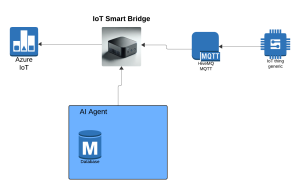
The Ultimate IoT Solution for Real-Time Data Analysis and Predictive Insights
The Internet of Things (IoT) is revolutionizing industries by enabling seamless connectivity among diverse devices, sensors, and systems. However, one of the most significant challenges organizations face today is integrating various IoT devices and platforms to ensure smooth communication and interoperability. In this article, we’ll explore how leveraging MQTT and Microsoft IoT solutions can simplify and enhance the integration of heterogeneous IoT ecosystems.
The Challenge of IoT Integration
Businesses typically deploy IoT solutions incrementally, using devices and platforms from different manufacturers. Over time, this creates isolated silos of information, reducing efficiency and limiting insights. Integrating these systems is essential for unlocking IoT’s true potential, enabling holistic analytics, seamless data flow, and centralized management.
MQTT: The Lightweight Integration Hero
MQTT (Message Queuing Telemetry Transport) has emerged as a popular protocol for IoT integration due to its lightweight, efficient, and scalable architecture. Designed for remote devices with limited bandwidth and power, MQTT operates on a simple publish-subscribe mechanism:
Publishers send data to a broker.
Subscribers receive data from the broker based on topic subscriptions.
MQTT’s simplicity reduces the complexity involved in integrating devices from multiple manufacturers. Additionally, MQTT supports Quality of Service (QoS) levels, ensuring messages are reliably delivered according to specific requirements.
Microsoft IoT: A Robust Framework for Integration
Microsoft IoT solutions, particularly Azure IoT Hub and Azure IoT Central, offer powerful platforms for seamlessly integrating diverse IoT systems:
Azure IoT Hub: Acts as a central messaging hub that allows secure, bi-directional communication between IoT devices and cloud applications. It supports MQTT natively, simplifying integration.
Azure IoT Central: Offers a fully managed SaaS solution that simplifies IoT application development, management, and integration without extensive coding.
Microsoft IoT platforms ensure secure data transmission, device provisioning, identity management, and analytics capabilities, making IoT integration straightforward and secure.
Practical Integration Steps
To effectively integrate IoT systems using MQTT and Microsoft IoT, follow these practical steps:
Device Configuration: Set up IoT devices to publish data using MQTT topics.
Broker Setup: Use Azure IoT Hub as an MQTT broker to manage device communication and subscriptions.
Data Processing: Utilize Azure Stream Analytics or Azure Functions to process and analyze incoming data.
Integration with Applications: Connect processed data to existing enterprise systems or dashboards (Power BI, custom applications) to enhance business insights and decision-making.
Real-World Examples
Agricultural Industry: IoT sensors deployed in fields gather data on soil moisture, temperature, humidity, and crop conditions. Using MQTT, these sensors publish real-time data to Azure IoT Hub, enabling farmers to receive actionable insights. Azure Functions or Stream Analytics process this data, triggering automatic irrigation or fertilization, resulting in optimized crop yield and resource usage.
Manufacturing Sector: Sensors on factory machinery publish operational data to Azure IoT Hub via MQTT. Real-time analytics identify patterns indicating maintenance needs, improving predictive maintenance schedules and reducing downtime.
Real-World Benefits
Implementing MQTT and Microsoft IoT solutions can significantly enhance IoT system integration, offering:
Improved interoperability across diverse IoT devices and platforms.
Centralized management reducing complexity and cost.
Enhanced scalability and flexibility to adapt to evolving business needs.
Robust security to protect sensitive data and systems.
Conclusion
Integrating IoT systems using MQTT and Microsoft IoT platforms empowers organizations to fully harness IoT capabilities. By overcoming the challenges of device fragmentation and data silos, businesses can achieve efficient operations, actionable insights, and competitive advantage in an increasingly connected world.